
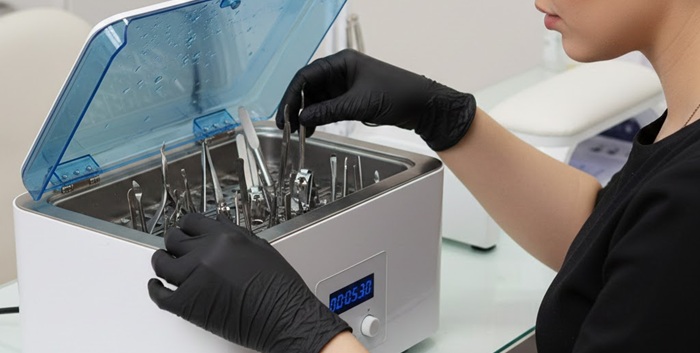
When it comes to nail tools, there are two types of people: those who think a quick rinse counts as cleaning… and those who know better.
If you’re here, congratulations—you’re clearly in the second group.
In the world of manicures, where precision meets hygiene, ultrasonic cleaning has become the secret weapon of serious nail techs and smart DIYers.
But here’s the catch: not every manicure and pedicure tool survives the ultrasonic spa treatment the same way. Some love the vibration-powered deep clean; others, well… let’s just say they don’t appreciate the “sonic workout.”
In this guide, we’ll break down what’s truly safe to drop in the tank—and what should stay far, far away—so your nail tools stay spotless, functional, and drama-free.
Let’s get your cleaning routine as flawless as your next set of nails.
Ultrasonic Cleaner for Nail Tools
Using an ultrasonic cleaner for nail tools has become almost standard in modern salons—and for good reason.
Pros
The benefits of using an ultrasonic cleaner for manicure and pedicure tools in professional nail salons start with the usage of high-frequency sound waves to remove dirt, polish residue, dead skin, acrylic dust, and hidden grime from tools far more effectively than manual scrubbing.
One major advantage is the consistency: every tool that goes into the tank comes out equally clean, no matter how busy the day has been or who is operating the machine.
This boosts overall hygiene, reduces human error, and ensures compliance with salon sanitation guidelines.
Another benefit is time-saving—while the ultrasonic cleaner works its magic, nail techs are free to prep the next client or sanitize the station. It also helps extend the life of expensive tools by minimizing abrasive scrubbing.
Cons
That said, there are a few drawbacks to using this ultrasonic cleaning device in salons. These include:
- Initial investment: High-quality machines can be pricey for small or new salons.
- Solution replacement costs: The cleaning solution must be changed regularly, adding to operational expenses.
- Unsupported materials: Certain items—like wooden handles, natural stones, and soft plastics—may get damaged due to vibration.
- Noise and heat: Some units produce audible buzzing and mild heat, which can be slightly uncomfortable in quiet salon environments.
- Not a sterilizer: Ultrasonic cleaners remove debris but do not kill all microbes—you still need proper disinfection or sterilization afterward.
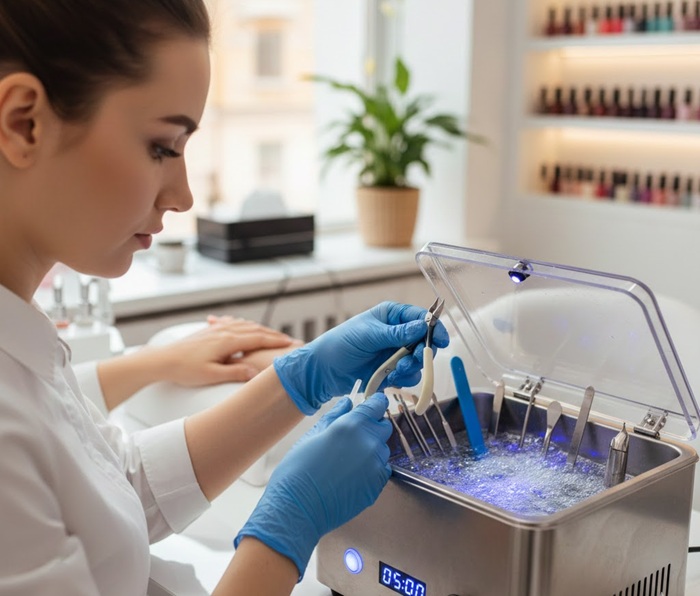
How to Clean Nail Tools in an Ultrasonic Cleaner?
Once you plan to use a nail tool cleaning machine, here’s a clear, safe step-by-step method for cleaning them:
- Inspect & pre-clean: Remove visible debris, nail polish, and large residue from your manicure tools with a soft brush and warm water. For heavy grime, a short soak in warm, soapy water helps.
- Fill the tank: Add clean water and a salon-grade, pH-neutral ultrasonic detergent to the manufacturer’s recommended concentration. Fill to the indicated level—do not overfill.
- Degas (optional but recommended): Run the unit empty or with plain water/solution for 3–5 minutes to remove trapped air—this improves cavitation.
- Load tools correctly: Use the basket; never let tools touch the tank bottom or each other tightly. Arrange items so cavitation reaches all surfaces.
- Set temperature & cycle: Use warm water (not hot) — roughly 40–50°C max for metal tools. Run a 3–10 minute cycle depending on soil level (start shorter for delicate items).
- Rinse thoroughly: Remove the nail tools, rinse under running water to remove residual solution.
- Dry & maintain: Dry completely, lubricate moving parts, and store in a sterile container or closed drawer.
Before you start cleaning, make sure your tools are compatible with ultrasonic cleaning—stick to stainless steel, hardened metals, and rigid plastics that can safely handle cavitation.
Avoid placing items with wooden handles, porous stones, or soft plastics in the tank, as the vibrations can damage them.
Also, remember that this process only removes debris; it does not disinfect or sterilize.
Always follow up with a hospital-grade disinfectant soak or use an autoclave for instruments that are autoclave-safe to ensure full hygienic compliance.
Lastly, prioritize safety: wear gloves and eye protection during handling, replace the cleaning solution regularly, and carefully follow the manufacturer’s instructions for both the ultrasonic machine and the disinfectant you use.
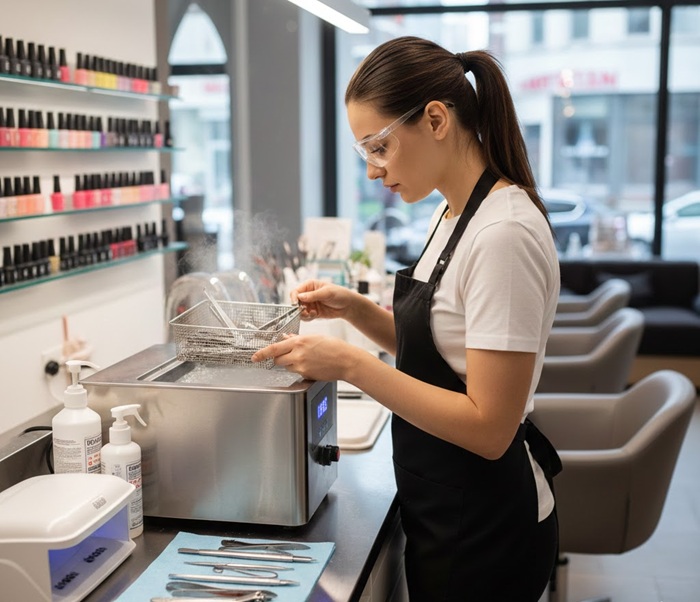
Which Nail and Beauty Tools Can You Clean Ultrasonically?
Ultrasonic cleaner machines are ideal for cleaning a wide range of nail and beauty tools—especially those made from stainless steel or durable metals.
Common manicure and pedicure tools like cuticle pushers, nippers, clippers, tweezers, bits for electric nail files, carbide drill bits, and sanding bands (only the metal mandrels, not the disposable sanding sleeves) can safely go into an ultrasonic cleaner.
The cavitation process effectively loosens acrylic dust, skin debris, gel residue, and polish buildup without damaging the metal surface.
Ultrasonic cleaning also works well for certain rigid beauty tools such as stainless steel blackhead extractors, tweezers used in brow shaping, eyelash extension tools, makeup brush components, and even metal implements used in spa facials.
Items you should not clean ultrasonically include porous stones, pumice tools, wooden-handled brushes, natural stones used in pedicure kits, and soft plastics that may warp or crack. Always check manufacturer guidelines when unsure.
Choosing the Right Ultrasonic Cleaner for Nail Salons – What to Look For?
Selecting the right ultrasonic cleaner for a nail salon requires a practical assessment of performance, durability, and hygiene requirements.
Start with tank capacity. A 1.5–3-liter unit works for individual technicians, while busy salons may need 6 liters or more to handle multiple sets of tools at once.
Ensure the tank depth can accommodate longer implements such as cuticle nippers and e-file bits without overcrowding.
Next, evaluate frequency. A 40 kHz ultrasonic frequency is the standard for metal manicure tools, offering efficient cavitation without causing surface pitting.
For delicate items, higher frequencies (60–80 kHz) are gentler, but most salons function well at 40 kHz.
A cleaner with adjustable timers and heating is also essential—heated cleaning (around 40–50°C) accelerates grime removal, and a programmable timer ensures consistent cycles regardless of staff workload.
Prioritize units with stainless steel tanks. These resist corrosion from detergents and disinfectants.
A mesh basket is non-negotiable, too, because your manicure tools should never sit directly on the tank floor.
Also, look for features like degas mode, which improves cavitation efficiency by removing trapped air, especially when using fresh solution.
Maintenance-related factors matter too. Choose a model with a drain valve for quicker solution changes and an easy-to-clean interior.
Noise levels should also be checked; quieter machines improve the salon environment. Finally, ensure the brand offers reliable warranty support and access to replacement parts.
Ultrasonic Cleaner vs. Manual Scrubbing: What’s More Hygienic for Cleaning Nail Tools?
When it comes to hygiene, ultrasonic cleaning easily outperforms manual scrubbing.
Hand-cleaning can remove surface debris, but it often misses microscopic buildup lodged in joints, hinges, and textured surfaces of nippers, clippers, and drill bits.
In contrast, ultrasonic cleaners use high-frequency vibrations to create millions of tiny bubbles that reach every crevice—areas no brush can physically access.
Manual scrubbing also relies heavily on technique, pressure, and consistency, leaving room for human error.
Ultrasonic cleaning ensures uniform, repeatable results every time. Beyond hygiene, it’s also gentler on tools, preventing scratches or dulling that come from aggressive scrubbing.
However, do remember that an ultrasonic cleaner is not a sterilizer. It should always be followed by proper disinfection or autoclaving.
Still, for the cleaning stage, ultrasonic cleaning is undeniably more thorough, efficient, and hygienic than manual scrubbing for most nail technicians.
