

If you reload your own ammunition, you already know this: clean brass isn’t just about looks.
It’s about consistency, chambering reliability, die longevity, and—let’s be honest—personal pride.
There’s something deeply satisfying about running a batch of grimy, range-pickup cases through a tumbler and pulling out brass that looks factory-fresh.
But not all tumblers are created equal.
The debate between dry media and wet tumbling has been raging in reloading rooms for years.
And while there’s room for both, rotary tumblers—especially wet systems—have become the gold standard for reloaders who want spotless primer pockets, polished interiors, and minimal dust.
In this guide, we’ll break down the different types of brass tumblers, then dive into the best rotary brass tumblers for reloaders, complete with technical insights, practical comparisons, and real-world considerations.
Whether you’re a weekend hobbyist or processing thousands of cases a month, this will help you choose wisely.
Different Types of Brass Tumblers
Before jumping into product recommendations, let’s clarify the landscape. Brass tumblers generally fall into two categories: vibratory (dry) and rotary (wet or dry).
1. Vibratory Tumblers (Dry Media)
These use vibration to agitate brass in dry media such as crushed walnut shell or corn cob. They are often marketed as RCBS Vibratory Case Cleaner or Frankford Arsenal Quick-N-EZ style machines.
Pros:
- Affordable
- Faster drying (no water involved)
- Simple setup
Cons:
- Dusty
- No internal case cleaning
- Primer pockets remain dirty
These are classic vibrating brass shell casing cleaners, and they still work fine for light-duty reloaders.
2. Rotary Tumblers (Wet or Dry)
Rotary tumblers use a rotating drum instead of vibration. When used with stainless steel pins, water, and detergent, they become a true wet tumbler for brass reloading—cleaning both inside and out.
Pros:
- Cleans primer pockets
- Cleans inside case walls
- Minimal dust
- Superior finish
Cons:
- Requires drying time
- Slightly higher upfront cost
- Heavier machines
If you want near-new brass every time, rotary systems win. That’s why rotary brass tumblers for reloading have exploded in popularity over the last decade.
7 Best Rotary Brass Tumblers for Reloaders
Choosing a brass tumbler isn’t one-size-fits-all. Here are the top-performing options on the US market today.
1- Frankford Arsenal Platinum Series Rotary Tumbler
If there’s one machine that consistently earns the “best overall” badge among American reloaders, it’s this one.
The Frankford Arsenal Platinum Series combines high capacity (about 7 liters), a powerful direct-drive motor, and a built-in digital timer—all in a user-friendly package.
It can comfortably process around 1,000 pieces of .223 brass in a single batch, making it ideal for high-volume shooters.
The leak-resistant drum design and rubber lining reduce noise and vibration, while the included stainless steel pins eliminate guesswork for first-time users.
For most home reloaders looking for reliable rotary brass tumblers for reloading, this model hits the sweet spot between performance, durability, and price.
2- Lyman Pro 1200 Tumbler
The Lyman Pro 1200 Tumbler is one of the most popular vibratory tumblers in the U.S.—and for good reason.
Designed for reloaders who prefer dry media cleaning, it holds up to 2 pounds of media and can process approximately 350 cases per cycle, making it ideal for moderate-volume shooters.
The standout feature of this Lyman Pro 1200 Tumbler is the built-in sifter lid, which allows quick and easy media separation without requiring a separate sifter.
That small design upgrade saves time and reduces mess in your reloading space.
Powered by a 115-volt motor, it delivers consistent vibration for effective exterior case polishing. While it doesn’t clean primer pockets like a wet rotary system, it’s simple, reliable, and efficient.
For reloaders who want a proven dry tumbler with minimal setup and straightforward operation, the Pro 1200 remains Lyman’s best-selling model for a reason.
3- Hornady Rotary Case Tumbler
Hornady brings its well-known reloading pedigree into the rotary tumbler category with a solid mid-range option.
The Hornady Rotary Case Tumbler offers around 6 liters of capacity and includes stainless pins for wet cleaning right out of the box. The drum seal system is secure and easy to tighten, reducing the risk of leaks.
It runs smoothly and is relatively quiet compared to many competitors. For reloaders already invested in Hornady presses or dies, this tumbler integrates nicely into an existing setup.
It’s a practical, no-drama solution for those who want professional-level cleaning without stepping into heavy industrial territory.
4- Frankford Arsenal Quick-N-EZ Case Tumbler
The Frankford Arsenal Quick-N-EZ Case Tumbler is a dependable vibratory system designed for efficient brass cleaning and polishing.
Operating on 110 volts with a generous 13.25-liter bowl capacity, it can handle up to 600 pieces of 9mm or around 350 .223 cases per cycle—making it suitable for moderate to high-volume reloaders.
The uniquely engineered bowl of this Frankford Arsenal Quick-N-EZ Case Tumbler increases brass agitation, delivering faster and more aggressive cleaning while helping reduce wear on reloading dies and extending brass life.
The clear lid allows you to monitor tumbling action without stopping the machine, and the cord-mounted ON/OFF switch adds a layer of safety and convenience.
It works especially well with walnut or corn cob media for removing case lube, oxidation, and surface fouling.
For reloaders who prefer dry systems over rotary setups, this unit offers a practical balance of capacity, durability, and ease of use.
5- VEVOR Rotary Tumbler
If budget is a major factor, the VEVOR Rotary Tumbler offers a surprisingly capable entry point. Featuring dual smaller drums, it’s well-suited for smaller batches or separating different calibers during cleaning.
While not specifically marketed as a reloading-exclusive machine, many shooters adapt it successfully for brass cleaning.
The motor is adequate for lighter loads, though it may not match the longevity or torque of premium brands.
For beginners comparing cheap brass tumblers for reloading, this option provides a cost-effective way to experiment with wet tumbling before committing to higher-end equipment.
6- Thumler’s Tumbler Model B
Originally designed for polishing rocks, Thumler’s Model B has earned legendary status among serious reloaders. Its belt-driven motor and steel frame construction make it incredibly rugged.
With a total load capacity of around 15 pounds (including brass, water, and pins), it handles large mixed-caliber batches with ease.
It doesn’t include a built-in timer, so you’ll need to manage that manually—but what it lacks in modern electronics, it makes up for in durability.
If you’re processing large volumes regularly and want a machine that feels industrial-grade, this brass case tumbler for reloading is a workhorse that can last for decades.
7- Lyman Cyclone Rotary Tumbler
Lyman’s Cyclone is the polished professional of the rotary tumbler world. With a heavy-duty motor and durable molded drum, it’s built for consistency and longevity.
It offers a similar capacity range to other premium models but distinguishes itself through smooth, stable operation and excellent sealing.
The drum’s tight O-ring system helps prevent leaks, even during longer cycles. Reloaders who prioritize build quality and brand reputation often gravitate toward the Cyclone.
It’s particularly appealing for those who want a dependable wet tumbler for brass reloading that performs batch after batch without fuss.
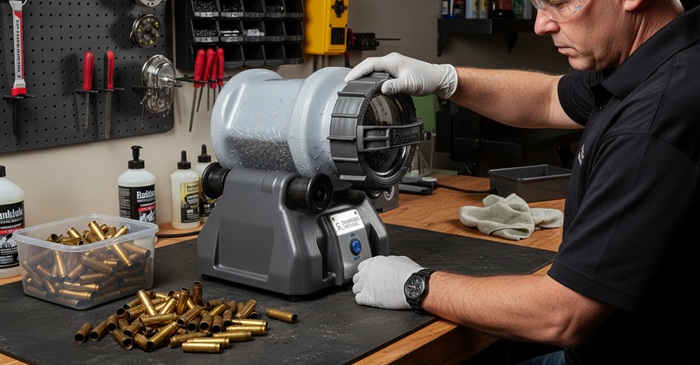
Things to Consider Before Choosing a Brass Tumbler
Choosing the right brass tumbler isn’t just about picking the most expensive model or the one with the flashiest marketing.
Your tumbler is a long-term investment that directly affects how clean your brass is, how long your dies last, and how much time you spend in the reloading room.
Whether you’re processing a few boxes after a weekend range trip or cleaning hundreds of cases for competition, understanding the key factors below will help you match the machine to your workflow and expectations.
1. Batch Size and Capacity
One of the first things to think about is how many cases you typically need to clean at once.
A tumbler with insufficient capacity means more cycles and more time wasted waiting on brass; too large, and you’re paying for unused capability.
Rotary systems often list capacity in liters or pounds—which translates roughly into how many rounds of common calibers they can hold (e.g., ~1,000 .223 cases in a 7L rotary).
Dry vibratory tumblers will list media capacity; media plus brass fill space, so you must factor both in.
Consider not only your current routine but your future needs—if you plan to shoot more or help shooting buddies, a slightly larger unit may be worth the investment.
2. Motor Strength and Durability
Unlike ultrasonic brass cleaners, tumble cleaning isn’t lightweight work. When you add water, stainless pins (if wet tumbling), and brass into a drum, it puts significant stress on the motor and gearing.
Less powerful motors can struggle under heavy loads, overheat, or fail prematurely.
A strong, high-torque motor is critical, especially in wet rotary tumblers, where the resistance from liquid and pins adds drag.
Look for motors designed for continuous duty (not just hobby use), with sealed bearings and thermal overload protection.
A durable motor will run quieter, last longer, and produce more consistent tumbling action that actually cleans instead of merely rattling brass around.
3. Seal Quality and Leak Prevention
If you’re considering a wet tumbler, how well the tumbler seals becomes crucial. Water, cleaning solution, and brass grit can damage electrical components and create unsafe conditions if they leak.
A good seal system—often using O-rings or compression lids—keeps the liquid contained and minimizes that messy splash factor.
Poor sealing can also decrease cleaning efficiency; water leakage reduces agitation and shortens useful runtime.
This is one reason many seasoned reloaders prefer premium rotary models with robust lids and gaskets—they save cleanup time and protect your equipment.
4. Noise Level and Workspace Environment
Brass tumblers, especially vibratory models, can be noisy. If your reloading area is attached to your living space or a workshop near regular activity areas, noise matters.
Rubber-lined drums, belt-driven mechanisms, or heavier base designs can significantly reduce audible vibration.
Dry tumblers tend to generate more high-frequency noise from media friction, while rotary models (especially with wet media) are quieter by comparison.
Thinking about noise isn’t just comfort—it can determine where you place the machine (garage, basement, dedicated room) and how often you’ll use it without driving family or housemates crazy.
5. Ease of Use and Maintenance
Ease of use encompasses everything from loading/unloading brass to cleaning and storing the machine.
Features like built-in timers, clear lids, and sifter attachments for dry media make basic tasks much smoother.
Wet tumble systems require drying afterward, and how easy it is to remove all water and media from the drum affects turnaround time.
Maintenance—like replacing worn gaskets, cleaning residual solution, or replacing media—should be straightforward.
Simple designs often win in the long run because you spend less time fiddling with parts and more time actually reloading.
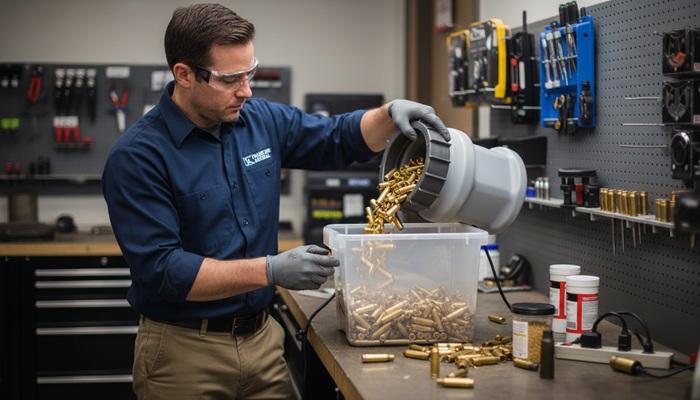
6. Media and Cleaning Solution Compatibility
Not all media and cleaning solutions perform equally. Dry tumblers use walnut shell or corn cob media, which are inexpensive but mostly polish the outside of cases.
Rotary wet tumblers use stainless steel pins with water and a detergent or citric acid solution to deep clean inside and out.
You should consider whether your tumbler allows easy media changes and whether you have access to quality cleaning solutions—finding the best brass tumbler cleaning solution for your setup can make a dramatic difference in results.
Some users prefer mild detergents to minimize brass discoloration, while others choose commercial chemistries designed to cut carbon faster.
7. Drying and Post-Tumbling Workflow
After tumbling, brass must be completely dry before resizing, priming, and powdering.
Wet tumbling leaves moisture trapped inside cases, which can cause primer seating problems or corrosion if not fully removed.
Some reloaders use specialized dehydrators, low-temp ovens, or air-dry racks. Think about how your brass drying process integrates with the tumbler you choose.
If you don’t have efficient drying plans, even the cleanest brass won’t be ready for immediate reloading.
8. Budget and Long-Term Value
Finally, think in terms of value, not just price tag. Cheaper tumblers may look appealing, but they can struggle with torque, noise, longevity, or sealing.
Investing slightly more upfront in a rugged rotary model often pays dividends through superior cleaning, reduced maintenance, and longer service life.
Conversely, budget tumblers have their place for light use or beginners—just set expectations accordingly.
Balance what you spend against how often you shoot, how much brass you process, and how important deep cleaning is to your reloads.
Final Thoughts
Reloading is equal parts science and craftsmanship. Clean brass sets the tone for everything that follows—resizing, priming, charging, seating.
While traditional dry systems still have their place, rotary tumblers deliver superior cleaning, reduced dust, and professional-level results. For most reloaders, the Frankford Arsenal Platinum Series Rotary Tumbler hits the ideal balance of performance and price.
If you process serious volume, consider stepping up to something like Thumler’s Tumbler Model B. If you’re budget-conscious, options like VEVOR Rotary Tumbler can get you started without draining your wallet.
At the end of the day, the best tumbler is the one that fits your workflow, budget, and volume. But once you experience truly clean brass—inside and out—it’s hard to go back.
